C-DReAM Satellite Trajectory Tool: Bridging Orbital Simulation, RF Channel Emulation & Digital Twins
September 8, 2026
September 8, 2026
Magister has extended the C-DReAM simulator with new features to better address the simulative validation, emulation, and digital twin modeling needs of the SatCom industry.
As satellite constellations continue to scale globally, the need for accurate validation and design tools is increasing. Operators and vendors must assess system performance across complex, multi-orbit environments.
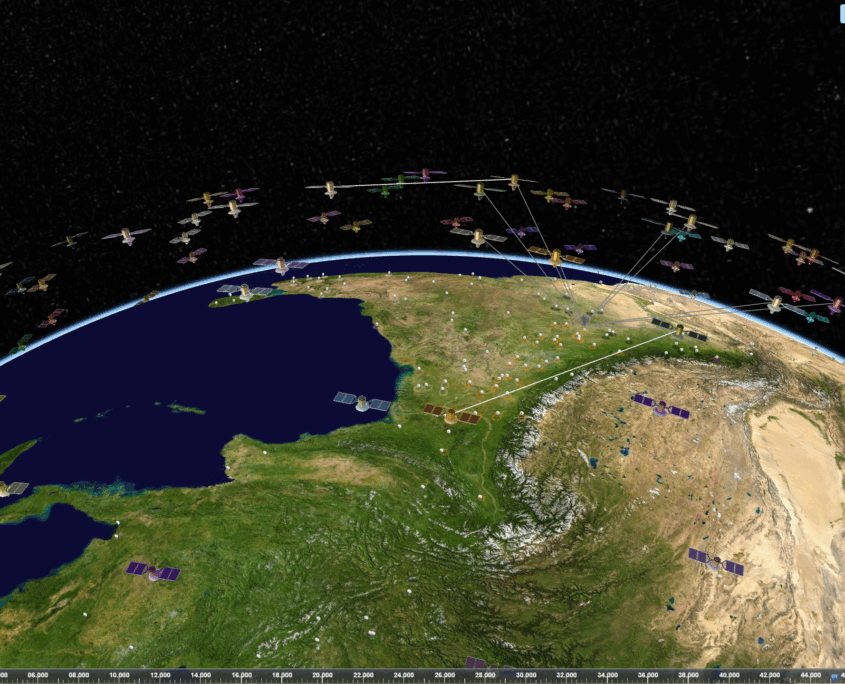
To meet this demand, C-DReAM has been further enhanced with new capabilities, strengthening its ability to validate commercial LEO, MEO, and GEO constellations. These enhancements extend the simulator’s ability to model time-stamped satellite trajectories and generate realistic outputs suitable for near real-time emulation.
A key objective of this development is to bridge the gap between system-level satellite simulation and real-time link-level emulation of actual network components.
C-DReAM is a Python-implemented capacity-level simulator capable of modeling satellite constellations from small to mega-sized NGSO and GSO systems. It’s used for analyzing, optimizing, and designing satellite constellations and hybrid 5G TN/NTN systems.
Developed through multiple European Space Agency projects, C-DReAM has been applied by our customers – such as Sateliot and Forsway – to design and evaluate SatCom systems and satellite constellations.
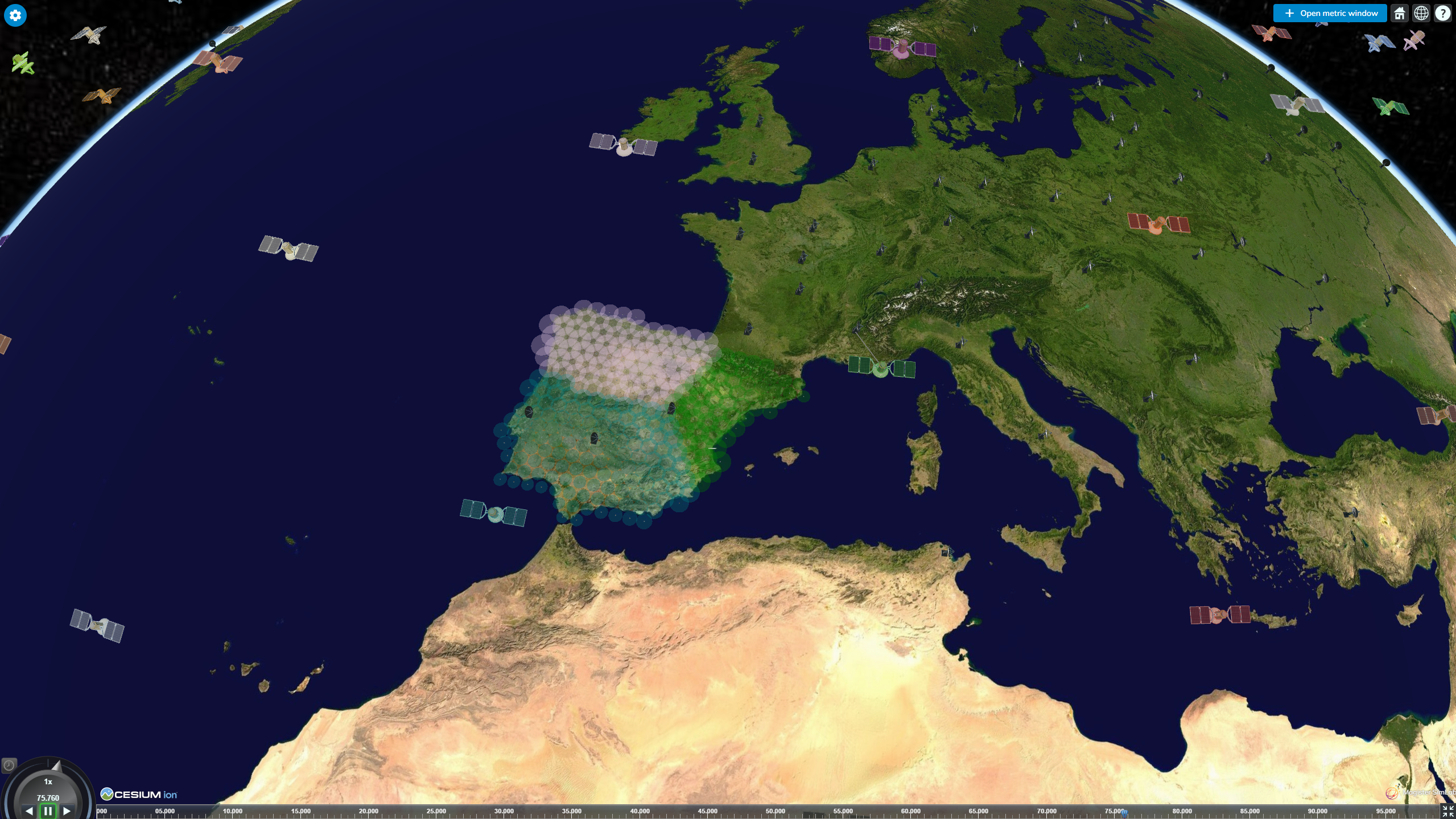
In the recent ESA-funded project “Satellite Trajectory Tool for Digital Twin and T&M Framework for SATCOM Space Segment”, Magister further extended C-DReAM with new software capabilities. These include the Satellite Trajectory Tool (STT) and SIB19 Configuration Tool (SCT), which generate time-stamped trajectory, channel, and signaling outputs for advanced scenario analysis, near real-time NTN user equipment emulation, and standalone visualization.
With these enhancements, C-DReAM becomes an even more robust and commercially ready solution for validating complex LEO, MEO, and GEO constellation scenarios. The simulator also takes a step toward supporting broader SatCom digital twin, test and measurement, and emulator-driven applications.
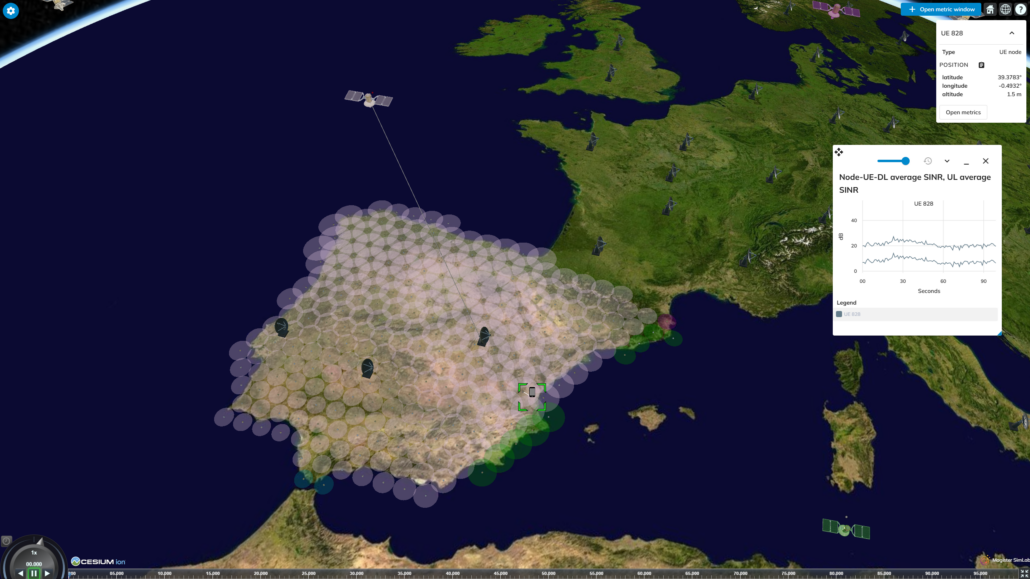
The Satellite Trajectory Tool (STT) is an extension module for C-DReAM, designed to connect system-level satellite simulation with external emulation environments. It provides SatCom emulators with system-level information about large-scale satellite constellations.
By bridging these domains, STT enables more accurate optimization of non-terrestrial systems, particularly in complex and large constellation scenarios.
STT is designed as an enabling component for external systems, including digital twin platforms, test and measurement frameworks, and emulator environments. It generates time-stamped system-level state information from C-DReAM and exposes it through structured, machine-readable interfaces that external systems can directly utilize.
STT is compatible with external NTN UE emulators. Its compatibility has been first confirmed with Emerson’s RF Emulation Platform, which was developed by Emerson Hungary in a parallel project. There are plans to further explore integration possibilities with other vendors in the future.
The System Information Block 19 (SIB19) Configuration Tool (SCT) supports the configuration and management of SIB19 parameters for satellite communications.
Introduced in 3GPP Release 17, SIB19 enables user equipment (UE) to access Non-Terrestrial Networks (NTN), including 5G satellite networks. SCT streamlines parameter configuration, supporting accurate configuration of NTN access and system behavior.
These developments strengthen the commercial viability of C-DReAM by enabling the generation of time-stamped trajectory, trace, and SIB19-related outputs for emulator integration and standalone scenario visualization.
The successful implementation of these tools, together with their integration into Emerson’s RF Emulation Platform, establishes a strong foundation for validating complex LEO, MEO, and GEO constellations. It also supports the continued evolution of C-DReAM toward digital twin and emulator-driven applications.

Dr. Kimmo Kaario, CEO
Magister Solutions
kimmo.kaario@magister.fi
+358443865550
Magister Solutions is a Finnish company that specializes in communication network simulation tools and services for modelling real-world communication systems (satellite and terrestrial) in detail.
As an independent company, we provide the industry with unbiased simulation-based evaluations of network and communication technology performance. This supports standardization and helps organizations make informed decisions about technology investments.
Accelerating the future of wireless system development today with system-level digital twins and detailed simulations.



Sepänkatu 14 C 16 FIN-40720 Jyväskylä, Finland
Business ID: 1998796-8
VAT number: FI19987968
info(at)magister.fi