Build Smarter Networks with System-Level Digital Twins: 5G, 6G, and Beyond
January 7, 2026

January 7, 2026
Every day, telecom operators are juggling competing demands, ranging from delivering flawless network performance, supporting millions of devices, responding instantly to network disruptions, and keeping up with accelerating technology development.
Traditional planning and testing methods struggle to keep pace with these demands. In a world where connectivity supports everything from mobile streaming to smart city infrastructure, reactive approaches are not enough.
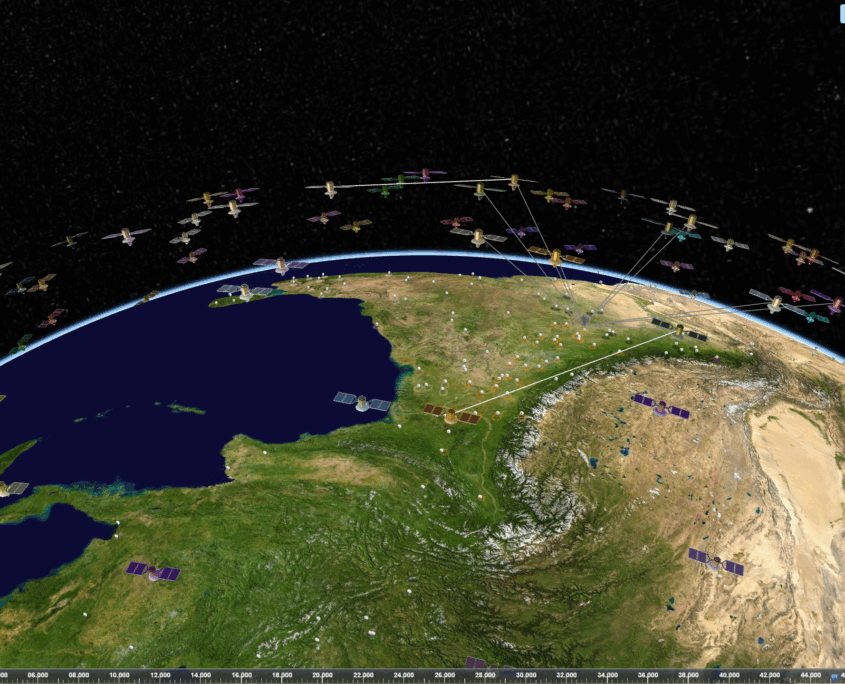
This is where system-level digital twins come in. By creating a virtual replica of a network, operators can simulate real-world conditions such as traffic peaks, signal interference, and cyberattacks. This helps evaluate and mitigate network behavior and resilience in both everyday and critical situations. Network engineers can plan smarter, optimize spectrum use, improve customer experience, accelerate 5G and 6G innovation, and deploy AI-driven optimization strategies with confidence.
Keep reading to discover six key areas where system-level simulation can advance telecom network design – helping operators innovate and optimize with greater efficiency.
Designing a telecommunications network is a complex balancing act that demands a deep understanding of industry standards, user needs, traffic patterns, and capacity requirements.
With growing innovation in technologies such as 5G TN/NTN, AI, IoT, and emerging 6G, networks are becoming increasingly dynamic, making development more challenging than ever. Traditional field-testing is costly, time-consuming, and lacks the flexibility to quickly explore alternative scenarios or iterate network designs.
System-level digital twins address these challenges. By creating a virtual model of the network, operators can simulate real-world conditions before deployment, assessing performance across diverse terrains and environments. You can predict network behavior under varying loads, identify coverage gaps, and optimize resource allocation with confidence.
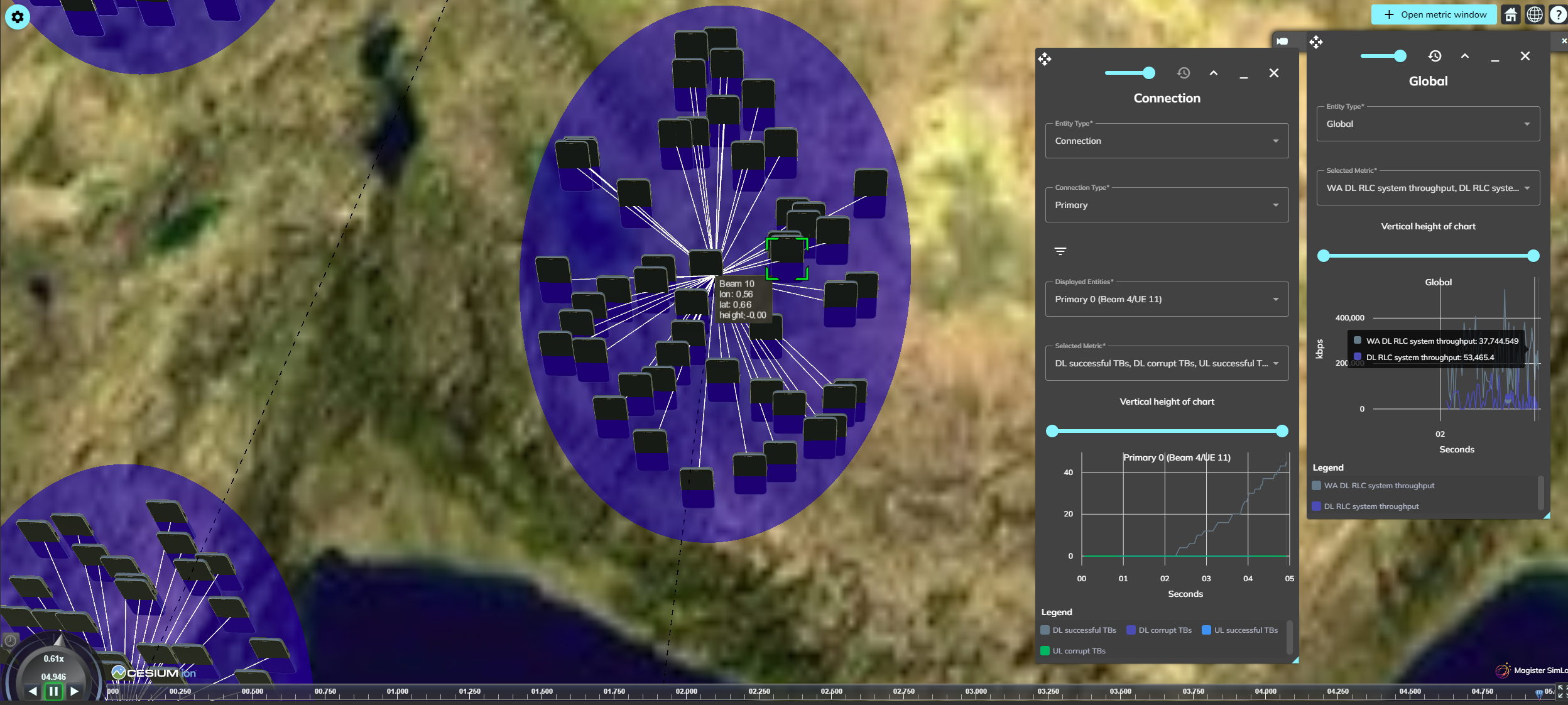
Detailed simulations capture the entire communications chain – from the physical layer including signal propagation, interference, and fading to protocol stack operations such as MAC (Medium Access Control) layer scheduling and application services. Assess link budget calculations with real-time SINR (signal-to-interference-plus-noise-ratio), throughput, and error rates.
Using digital twins, network architectures can be validated and optimized virtually, reducing physical testing costs, shortening deployment timelines, and enabling you to iterate designs rapidly. This ensures that networks are performant and scalable from day one, reducing risk and accelerating time-to-market.
Telecom networks are vulnerable to outages caused by climatic events, equipment aging, electrical faults, hardware failures, or cyberattacks. These disruptions affect millions of users, result in revenue loss, and can erode customer trust.
As networks extend across the world with growing 5G TN/NTN deployments, reactive maintenance is no longer sufficient. Proactive strategies are needed to anticipate failures and enhance resilience.
System-level digital twins provide a virtual model of the network, enabling evaluation of potential crisis situations. By integrating data from real networks, planned networks, sites, and user devices, they help detect early signs of degradation. Simulate node failures and cascading effects across interdependent systems, assessing how disruptions propagate. Autonomous network recovery strategies can also be tested.
Network security and resilience should never be an afterthought – they should be integrated into the design process from day one. By simulating network resilience under real-world conditions, you can identify vulnerabilities and bottlenecks in communication architectures early. This helps prevent issues before they escalate and ensures a stronger, more reliable network.
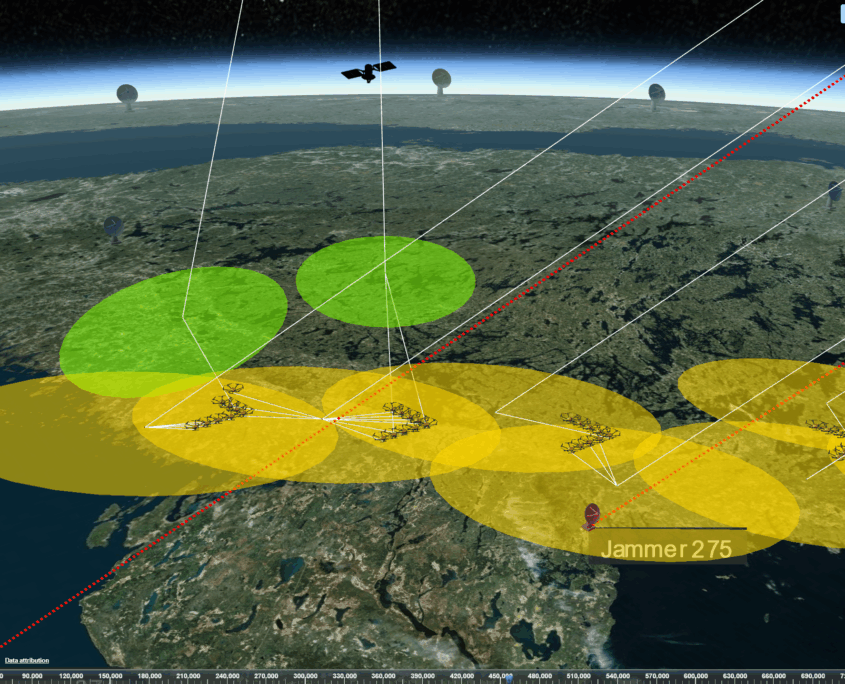
Simulation helps strengthen cybersecurity strategies and prepare for cyberattacks. For example, explore the effects of jamming or interference in realistic operating environments. You can explore scenarios where network integrity is compromised, such as node loss, isolation, or self-healing. This enables risk evaluation and contingency planning before service quality suffers.
Spectrum management remains one of the telecom industry’s biggest challenges. It focuses on regulating and optimizing the use of radio frequencies for wireless communications. With the expansion of 5G TN/NTN, early 6G research, massive IoT deployments, and growing demand for connectivity, efficient spectrum management is crucial.
Although the electromagnetic spectrum is theoretically unlimited, the practical range for wireless communications is roughly 300 kHz to 300 GHz. Lower frequencies can’t support high data rates, while extremely high frequencies are often unsafe or impractical.
Spectrum management aims to maximize the value of this scarce resource. The goal is to ensure efficient utilization, protect public interest, and prevent interference between systems such as satellite networks and terrestrial 5G. Interference can degrade network performance, leading to service issues and revenue loss.
Simulation offers a controlled environment for modeling spectrum usage and evaluating coexistence strategies. You can model channel interference across a range of scenarios – such as adjacent-band use or shared-band operations – and quantify how much degradation occurs. This helps define constraints and mitigation techniques to keep interference between acceptable limits.
Through system-level simulation, you can analyze signal propagation across frequencies, observe device behavior under varying traffic loads, and examine how interference patterns evolve with changes in topology or user distribution.
This enables rigorous testing of spectrum-sharing mechanisms and coexistence strategies without disrupting live networks. With accelerating connectivity demands, this is essential for building resilient, high-performing networks that can adapt for future challenges.
Read more: Evaluating how satellite networks can best coexist with terrestrial 5G
Telecom operators face unprecedented pressure to deliver flawless network performance as user expectations soar and networks become increasingly multi-faceted. Customers now expect seamless connectivity, instant app responses, and zero disruptions – whether they’re streaming video, joining online meetings, or utilizing IoT devices. In today’s hyper-competitive market, customer experience has become the ultimate differentiator.
The challenge lies in the number of variables shaping that experience: device capabilities, mobility patterns, radio signals, routing decisions, and cloud workloads supporting modern applications. Rather than reacting to issues as they occur, operators need a proactive, customer-centric strategy that anticipates and resolves issues before users even notice them.
System-level simulation makes this possible by providing an end-to-end view of the customer experience. Digital twins can replicate real traffic patterns, user behavior, application demands, and environmental conditions in realistic virtual settings. This allows operators to predict congestion and coverage gaps before they impact service. For instance, during large-scale events like concerts, digital twins can forecast network load and guide adjustments – like reallocating capacity or optimizing routing – to maintain service quality.
One of the most critical advantages of simulation is the ability to understand and optimize traffic prioritization. When networks become overloaded, mission-critical services – such as emergency communications – must take precedence. With a digital twin, operators can test how Quality of Service (QoS) mechanisms and priority routing behave under true congestion conditions. They verify that essential traffic remains protected while nonessential background processes are automatically deprioritized.
As customer needs and business applications evolve, networks must evolve with them. Building scalability and adaptability into network design from the start is key to maintaining high-quality customer experiences in a world of rapid technological progress.
The transition to 5G marked one of the most significant leaps in telecom history, delivering speeds up to 10 times faster than 4G and enabling a range of innovative use cases. Now, as the foundations of 6G are taking shape, telecom operators and vendors face intensifying pressure to innovate while navigating unprecedented technical complexity.
Future 6G systems will extend the capabilities of 5G, pushing network performance even further and unlocking new business opportunities. 6G promises ultra-low latency, AI-native features, seamless non-terrestrial network (NTN) integration, improved energy efficiency, support for billions of connected devices, and greater overall resilience.
However, designing a network architecture that seamlessly incorporates all these technologies is a challenge. Additionally, based on lessons learned from 5G’s multiple architecture options, the goal for 6G is clear: a more simplified design.
For engineers developing next-generation networks, it’s essential to have an efficient way to quickly iterate and compare alternative technologies with one another. System-level simulation makes this possible, enabling teams to evaluate aspects such as radio channel behavior, propagation conditions, network topologies, and mobility patterns in a controlled, digital environment. These digital twins reveal system-wide interactions that determine performance at scale. Model the entire network end-to-end, including RAN, core, cloud, edge, and transport layers.
Understand how emerging networks perform in urban settings, industrial automation workloads, or massive IoT deployments. This makes it possible to identify scaling limits, uncover bottlenecks, and validate architectural decisions that will shape the next generation of connectivity.
Crucially, system-level digital twins empower operators and researchers to experiment early, validate ideas quickly, and contribute meaningful input to global standardization efforts, such as those led by the 3GPP.
Read more: Simulating the road towards smooth TN/NTN interoperability, 6G, and AI in NexaSphere
As highlighted throughout this article, modern telecom networks have become too large, too dynamic, and too complex for traditional management approaches to keep pace. Manual operations are inefficient and prone to human error, especially as networks evolve toward multi-layer, cloud-native, and highly distributed architectures.
Amid these challenges, artificial intelligence (AI) is emerging as a solution for network optimization. AI-driven systems promise self-optimizing, self-healing networks that adapt in real time to changing conditions and user demands.
For example, AI models can analyze previous traffic patterns to predict future demand and pre-emptively allocate resources during peak periods. They can also detect anomalies – such as cyberattacks or sudden surges in traffic – far faster than humans, enabling instant mitigation and improved service continuity.
However, the role of AI in network optimization is still evolving, and its adoption comes with important considerations. AI models must be properly trained, validated, and proven suitable for critical tasks.
In network design, determinism is key; models should produce consistent outputs when given the same inputs to avoid unpredictable behavior. Transparency is equally important. Operators must be able to understand and monitor AI-driven decisions to ensure that optimizing one aspect of the network does not inadvertently compromise another.
System-level simulation provides the ideal platform for developing and validating AI-driven optimization strategies. By modeling realistic traffic patterns, user mobility, and cyberattack scenarios, you can assess AI responses and ensure that automated strategies remain consistent and dependable.
Read more: Exploring AI’s Potential and Challenges in Software and Wireless System Design
C-DReAM: System-Level Digital Twins for Smarter Connectivity & Mobility
ALIX: Protocol-Level Simulations for 5G Terrestrial & Non-Terrestrial Networks
Magister SimLab: Graphical User Interface for Versatile Simulation Campaigns

Accelerating the future of wireless system development today with system-level digital twins and detailed simulations.



Sepänkatu 14 C 16 FIN-40720 Jyväskylä, Finland
Business ID: 1998796-8
VAT number: FI19987968
info(at)magister.fi