Accelerate Technology Development
Test new technologies, features, and architectures faster than with physical trials.
.

Accelerate innovation, validate decisions, and explore complex satellite and 5G TN/NTN scenarios – from concept to orbit – using system-level simulation and digital twins.

Speed Up Innovation
Move faster from concept to deployment through simulation-driven iteration.

Validate satellite and network performance before committing to hardware or launch.

Develop reliable next-generation 5G NTN and hybrid TN/NTN systems.
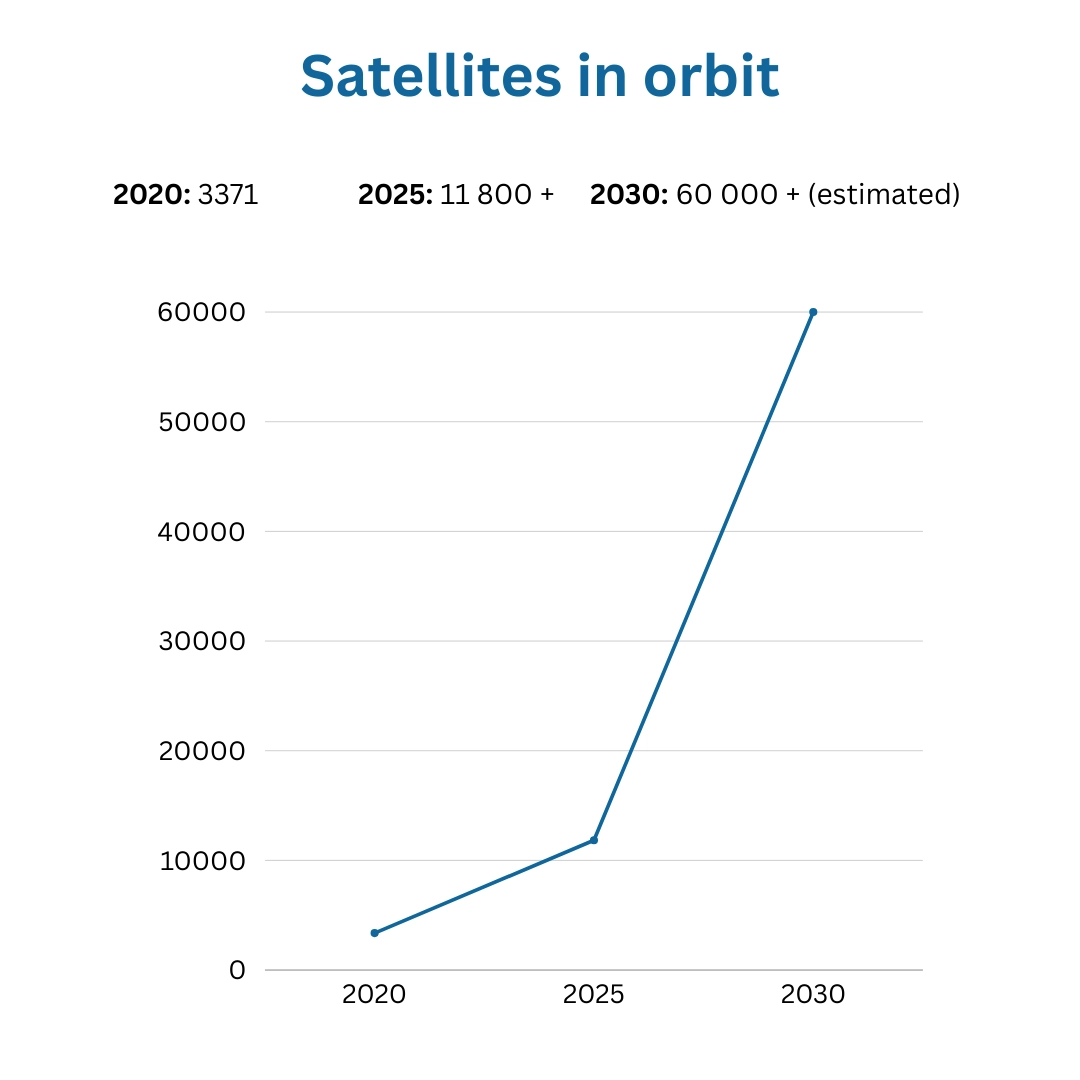
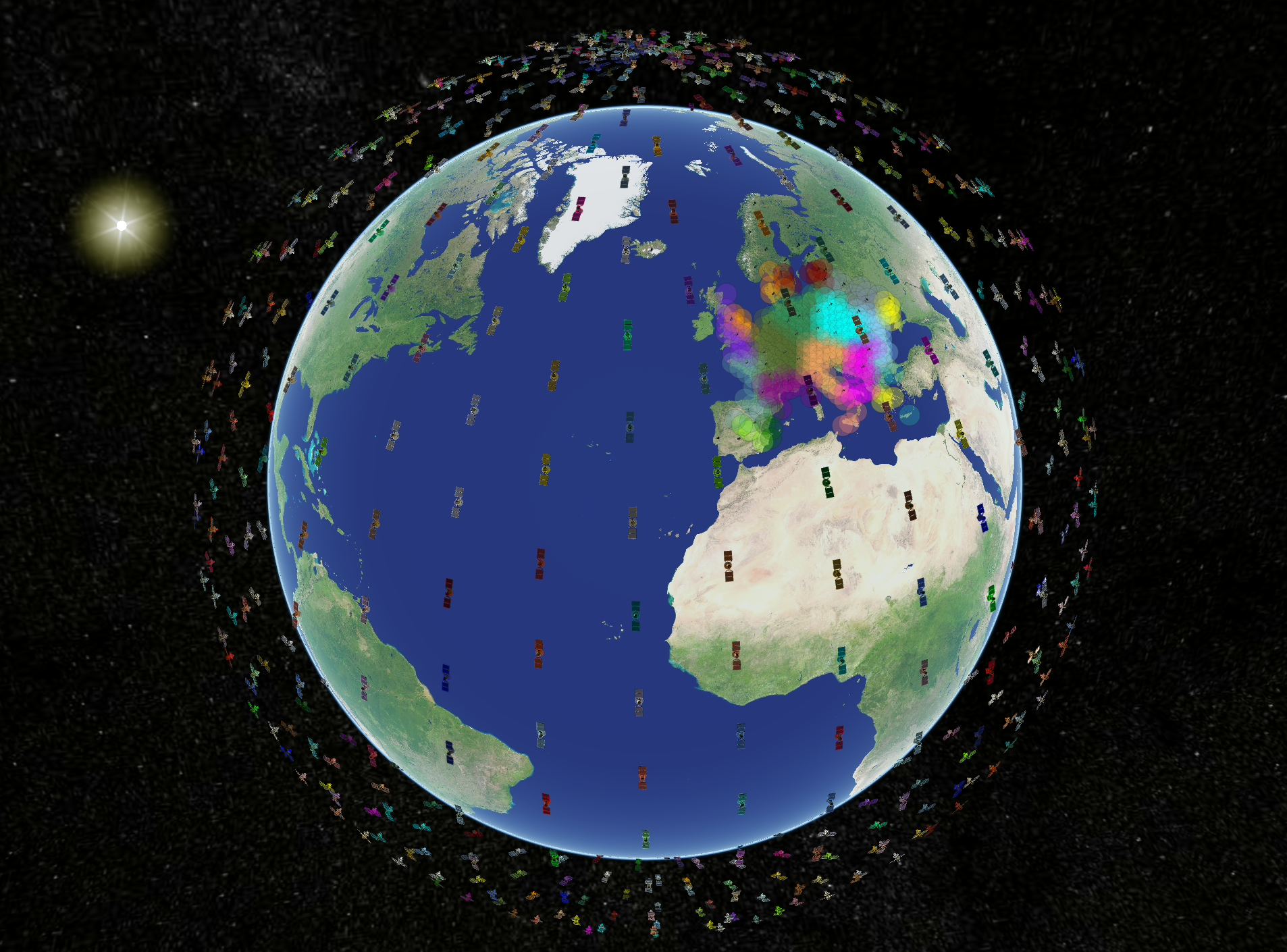
The space landscape is evolving rapidly. Over ten thousand satellites are already in orbit, with thousands more planned. At the same time, non-terrestrial networks (NTN) are integrating satellite and terrestrial systems to extend global connectivity.
This growing complexity makes system-level understanding essential – both before deployment and throughout operational life. Simulation provides deep insight into system behavior, interactions, and coexistence across satellite constellations, terrestrial networks, and hybrid TN/NTN architectures.
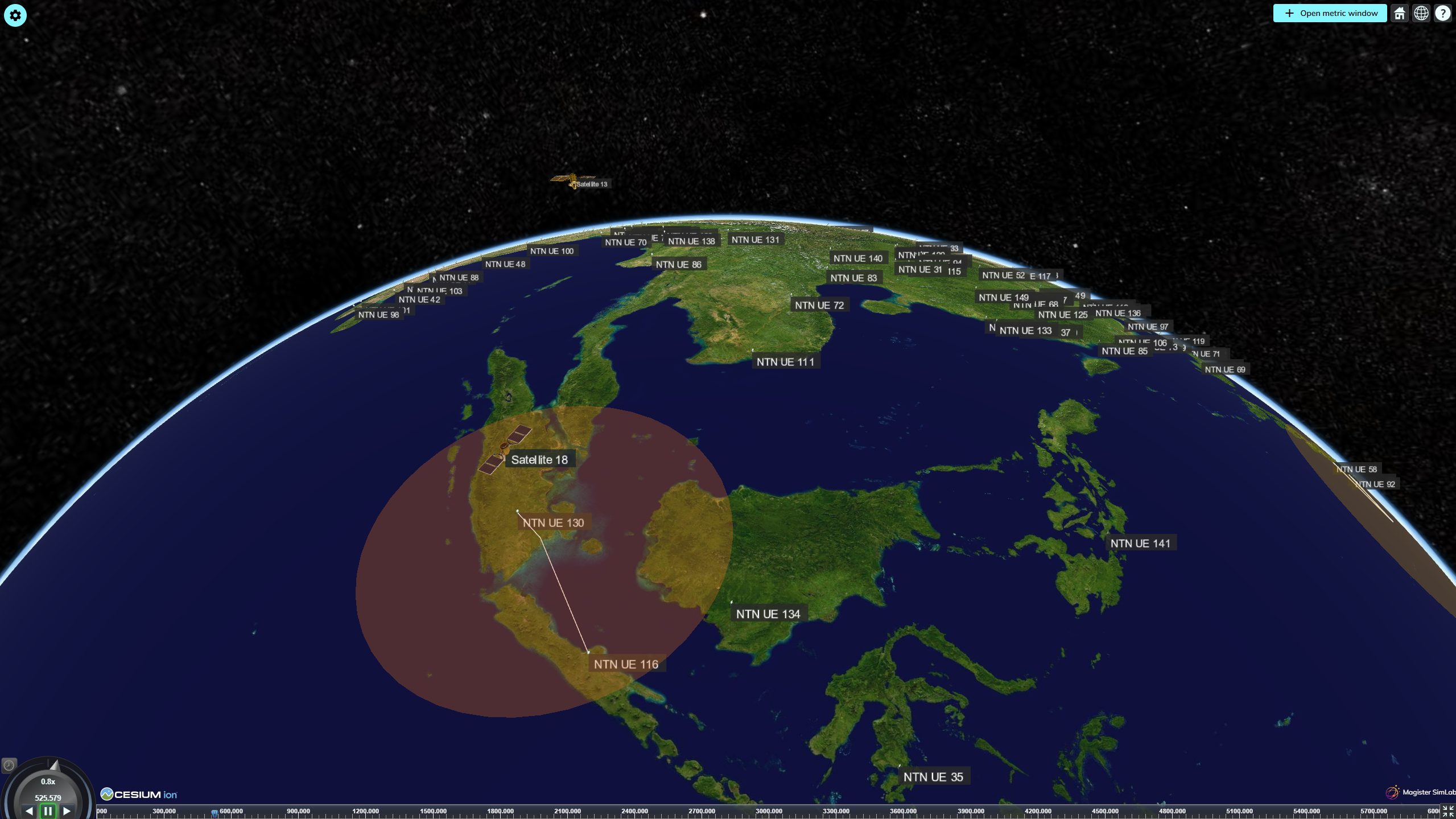
System-level simulation uses digital models to analyze and optimize space systems across their lifecycle – from early design to post-launch operation.
Simulation is critical in the space domain due to:
Test new technologies, features, and architectures faster than with physical trials.
.
Gain deep insight into system behavior to optimize performance before and after deployment.
Evaluate realistic scenarios without the cost and complexity of field trials or launches.
Run countless simulations across different parameters, conditions, and scenarios to identify issues early.
Simulation supports continuous optimization across the full system lifecycle, from early R&D to refinement during real-world operation.
After deployment, system-level simulation enables you to:
✓ Run unlimited virtual simulations – faster and more cost-effectively.
✓ Identify and resolve issues early before committing to expensive hardware.
✓ Explore new features and technologies, such as hybrid networks and beam hopping.
✓ Analyze complex system behavior under realistic conditions.
− Physical testing is expensive, slow, and limited.
− Issues may be discovered too late to fix cost-effectively.
− Development cycles are longer.
− Complex space and network scenarios are difficult to reproduce in real-world settings.
Get in touch to discuss your system, objectives, and challenges.
Discover how system-level simulation and digital twins bring efficiency, insight, and confidence to your development process.

Accelerating the future of wireless system development today with system-level digital twins and detailed simulations.



Sepänkatu 14 C 16 FIN-40720 Jyväskylä, Finland
Business ID: 1998796-8
VAT number: FI19987968
info(at)magister.fi