Ensure Quality and Interoperability
Assess compliance with global standards, networks, and devices, including TN/NTN coexistence and interference.


We support 5G TN/NTN analysis and development through system-level simulation, helping organizations evaluate networks from research and system design to standardization and deployment.
Our expertise includes coexistence and interference analysis between TN/NTN as spectrum competition continues to grow.
As a full member of the 3GPP and ETSI, we contribute to 5G TN/NTN and 6G standardization, giving us early insight into evolving specifications and helping keep your technology aligned and future-proof.
Assess compliance with global standards, networks, and devices, including TN/NTN coexistence and interference.
Stay informed on 5G TN/NTN and 6G developments through our active involvement in 3GPP standardization.
Use simulation-backed insights to accelerate development and reduce rework.
3GPP Release 17 marked the introduction of standards for non-terrestrial networks (NTN), reflecting the growing role of satellites in extending connectivity. Since then, Magister has supported 3GPP and ETSI standardization through system-level simulation.
Looking ahead to 6G, we are involved in international projects exploring next-generation TN/NTN technologies and their future evolution – including the NexaSphere project, which aims to design a 6G-based satellite network.
Native NTN and AI: Current Visions for the 6G Network
From 5G to 6G non-terrestrial networks (NTN)
Building 5G TN/NTN Resilience with Simulation
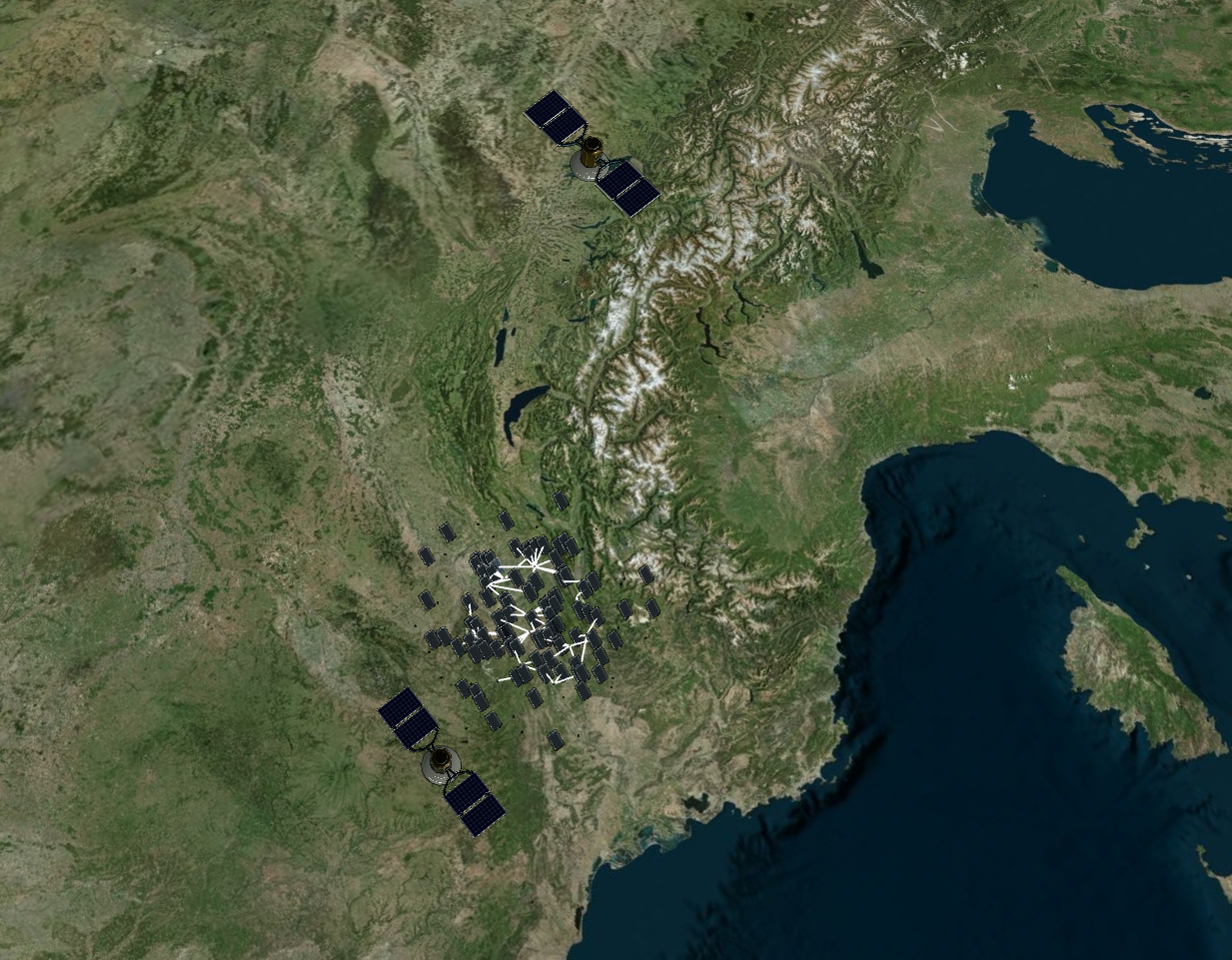
ALIX is a protocol-level system simulator well-suited for evaluating 5G TN/NTN networks.
It enables detailed analysis of network performance, supports alignment with 3GPP standardization, and allows exploration of future technologies. ALIX also enables objective comparison of alternative communication technologies, including 5G NR and DVB.
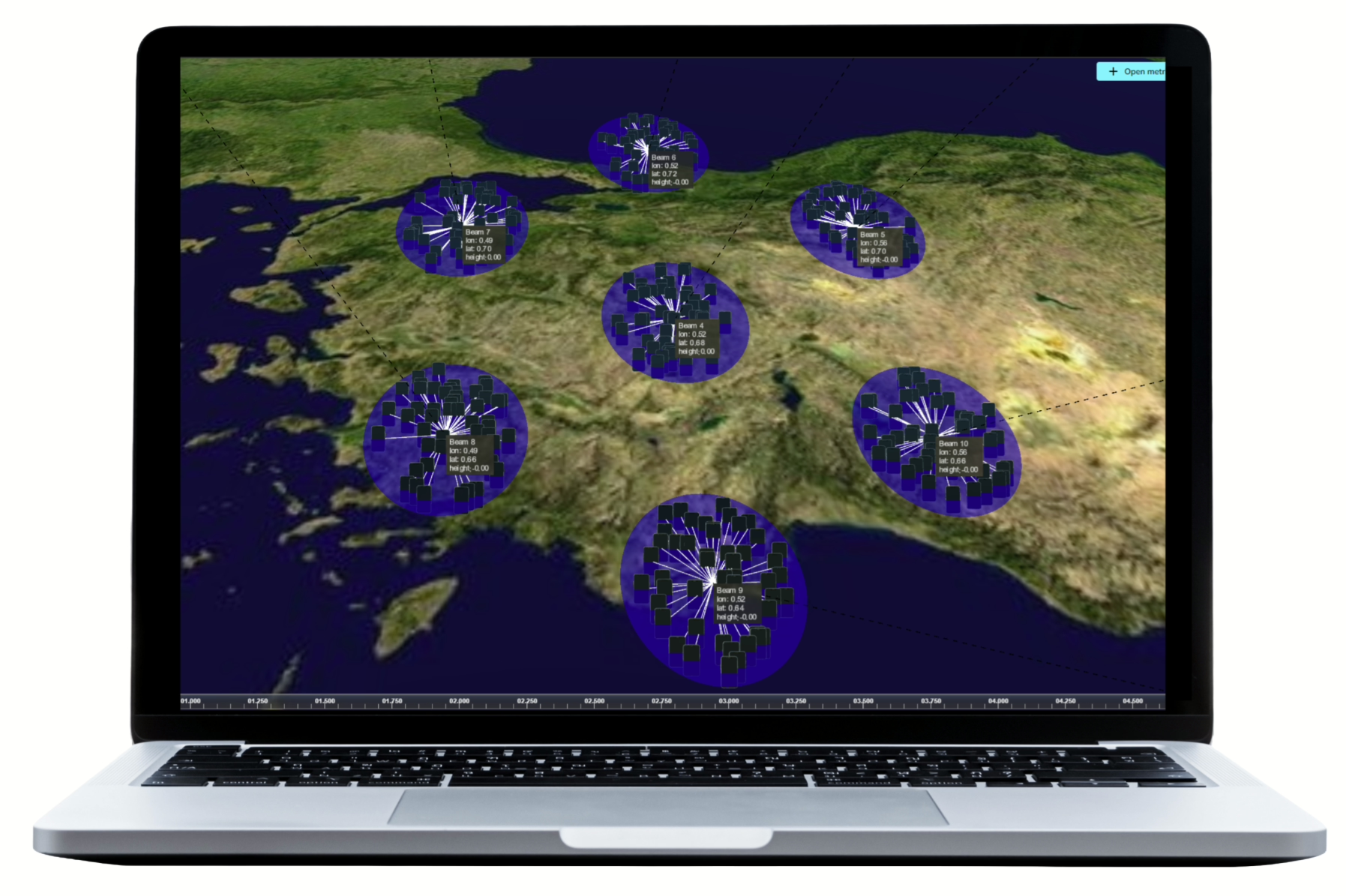
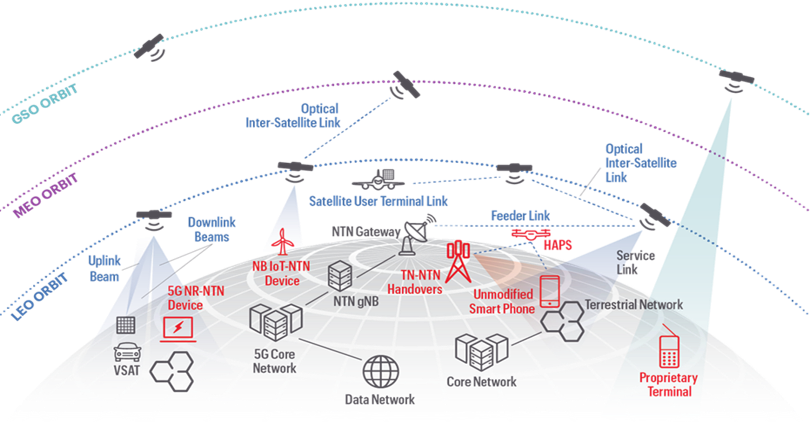
The NexaSphere project aims to design a 3D communication network integrating spaceborne, airborne, and terrestrial infrastructures. Magister leads the system-level simulation and validation of TN/NTN networks to support seamless coexistence towards 6G.
5G-EMERGE project
The 5G-EMERGE project is developing an integrated satellite-terrestrial system to deliver high-quality media content closer to users.
Led by the EBU and funded by ESA, the project explores 5G NR-NTN integration and supports European leadership in media delivery innovation.
DYNASAT project
The DYNASAT project promoted 5G NTN technologies, demonstrating new techniques like satellite multi-connectivity, coordinated dynamic spectrum access in TN/NTN scenarios, and non-coordinated spectrum sharing in hybrid TN/NTN environments.
ALIX project
The ESA-funded ALIX project supported the integration of satellite components into 3GPP’s 5G standards by leading and contributing to key technical reports and change requests across Releases 15, 16, 17, and 18.
MARINA project
The MARINA project, led by Magister and funded by ESA, developed a fair method for comparing DVB-S2X and 5G NR technologies for GEO broadband satellite networks.
It revealed key performance differences and contributed findings to ETSI and 3GPP standardization efforts.
NTN-CPD project
The NTN-CPD project demonstrated a software-based control plane for 5G NR in Non-Terrestrial Networks (NTN), focusing on NGSO constellations.
What are Non-Terrestrial Networks?
Non-Terrestrial Networks (NTN) are wireless communication systems that operate above the Earth’s surface.
They use spaceborne or airborne assets to provide connectivity – such as satellites in Low Earth Orbit (LEO), Medium Earth Orbit (MEO), and Geostationary Orbit (GEO), as well as high-altitude platforms (HAPs), and unmanned aerial vehicles (UAV) commonly known as drones.
What are the benefits of Non-Terrestrial Networks?
Non-Terrestrial Networks extend network coverage to underserved, remote and hard-to-reach areas, where terrestrial network coverage is limited or unavailable. Therefore, NTNs are essential for applications such as emergency response and critical communications.
What is NTN in 5G?
NTN in 5G refers to the integration of non-terrestrial elements – like satellites – into the 5G mobile network.
While traditional 5G relies on ground-based infrastructure, 5G NTN extends connectivity beyond terrestrial coverage, supporting remote areas, and enhanced network resilience.
The 3GPP introduced the first set of normative 5G NTN requirements in Release 17.
What is NTN in 6G?
While 6G standards are still under development, a key expectation is that NTNs will be natively integrated from the outset – unlike in 5G, where it was added later.
The NTN component fully integrated into 6G better meets industry needs and consumer expectations.
This is made possible by advancements in the satellite industry and the need to consider NTN/TN integration since the beginning.
What does 3GPP standardization mean?
The 3GPP (3rd Generation Partnership Project) brings together seven telecommunications standard development organizations around the world.
Since its establishment in 1998, 3GPP has developed technical specifications for cellular telecommunication systems, including radio access, core network, and service capabilities.
Initially focused on terrestrial networks, 3GPP expanded its scope to include Non-Terrestrial Networks (NTN) during 5G studies. It’s currently working on standards for 5G-Advanced as part of Release 19.
Discuss your 5G TN/NTN system development, standardization, and integration challenges with our specialists.

Accelerating the future of wireless system development today with system-level digital twins and detailed simulations.



Sepänkatu 14 C 16 FIN-40720 Jyväskylä, Finland
Business ID: 1998796-8
VAT number: FI19987968
info(at)magister.fi